

From Values to Action: Building the Collective Muscle for Sustainable Culture Change at MassDevelopment
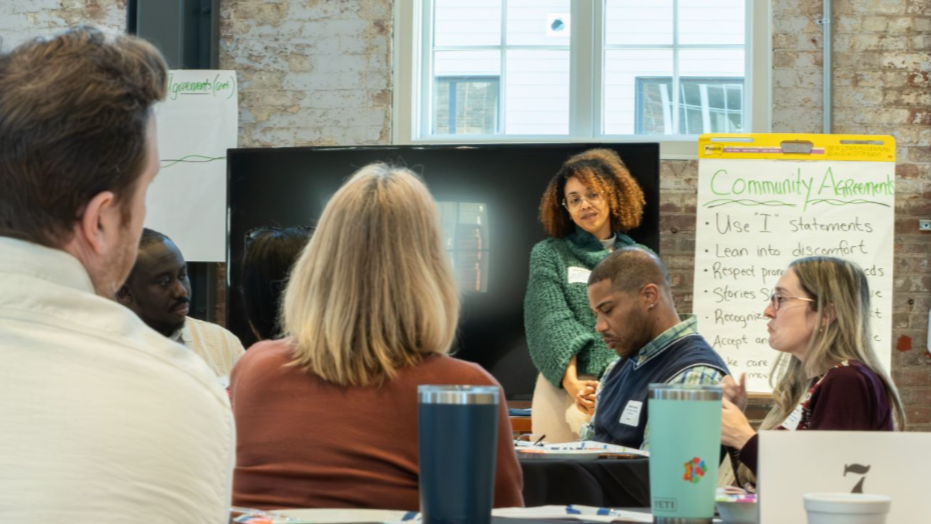
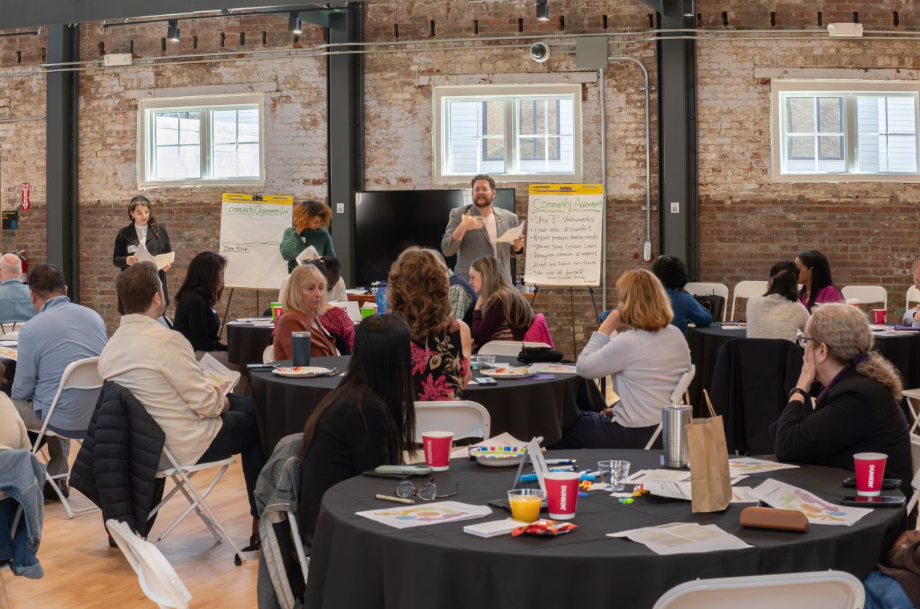
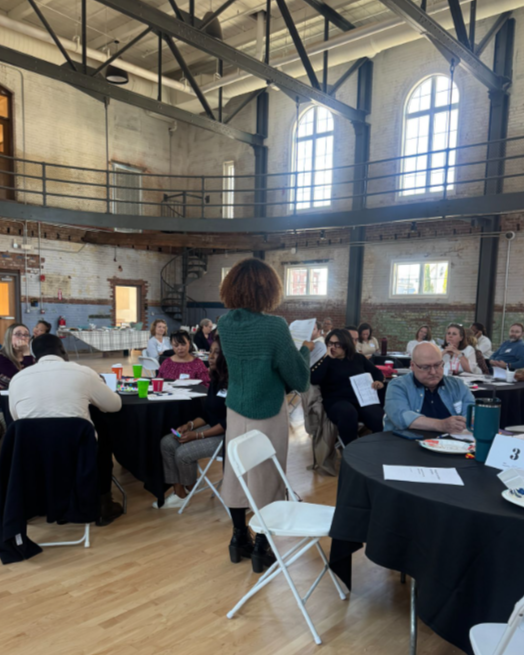
Arts Equity Group designed and facilitated a highly participatory culture change workshop that brought together approximately 50 staff across three MassDevelopment departments to examine how workplace culture is created, identify where existing norms and practices may be out of alignment with newly established organizational values, and develop concrete commitments for putting those values into practice.
Photos by Louis Cotto.
Project Overview
Client Background
MassDevelopment is Massachusetts’ development finance agency and land bank, supporting businesses, nonprofits, housing, and economic development projects in communities across the Commonwealth.
As part of broader organizational culture work, MassDevelopment established its core values that would guide the organization; the next challenge was helping staff understand what those values could look like in everyday practice.
Objectives
MassDevelopment sought Arts Equity Group’s support to design and facilitate a culture change workshop for approximately 50 staff from Community Development, Business Development, and Finance & Accounting.
Bringing these distinct departments together created an opportunity to build stronger relationships across teams, while helping employees examine their individual and collective roles in shaping workplace culture. The workshop aimed to help participants understand how cultural norms form and are reinforced, develop a shared vocabulary for identifying those norms, and generate concrete commitments to behaviors that would bring MassDevelopment’s core values to life in their day-to-day work.
Rather than approaching the workshop as a one-time training or compliance exercise, AEG designed it as an entry point into longer-term systems change: building the awareness, shared language, and collective capacity needed for employees to intentionally shape organizational culture together.
Challenges
MassDevelopment’s Community Development, Business Development, and Finance & Accounting divisions perform distinct but interconnected roles. Staff across these teams frequently contribute to different stages of the same projects, but opportunities for cross-divisional interaction and relationship-building can be limited.
Different workflows, communication practices, priorities, and team cultures can make it difficult for employees to see how their individual work connects to colleagues across the organization and to MassDevelopment’s larger mission. Like many complex institutions, established practices can also become embedded over time, making it challenging to identify where existing norms may no longer support the culture an organization is working to build.
With newly established organizational values in place, MassDevelopment needed a way to move those values from aspiration to application: creating space for staff to examine how culture operates in practice and identify realistic ways to align everyday behaviors, relationships, and processes with the organization’s stated values.
Arts Equity Group’s existing embedded consulting relationship with MassDevelopment provided critical organizational context for this work. Drawing on that knowledge and close collaboration with the MassDevelopment leadership team, AEG was able to design a workshop grounded in the specific dynamics, responsibilities, and experiences of the participating teams.
Our Offerings
-
-
-
-
Item description
Contributors
Danielle Amodeo, JT Martin and Dr. Bulaong Ramiz
Impact and Outcomes
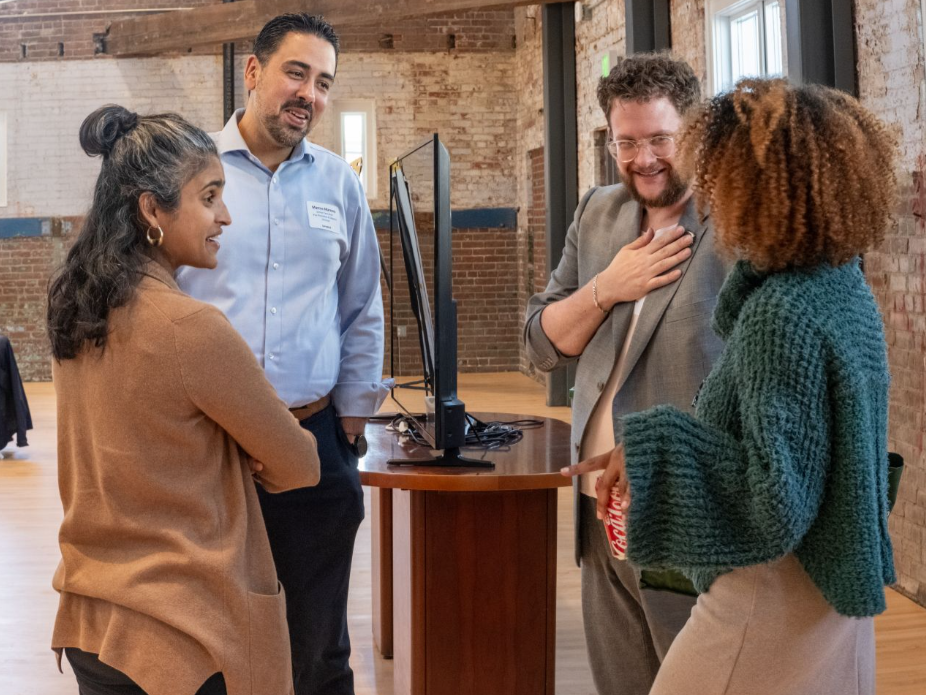
The workshop created dedicated space for employees across Community Development, Business Development, and Finance & Accounting to build relationships, learn about one another’s work, and examine organizational culture together, an especially meaningful opportunity for colleagues who regularly contributed to interconnected projects but had limited opportunities to engage with one another in person.
By moving participants through a progression from individual reflection to collaborative problem-solving, AEG helped make an abstract concept like “culture change” tangible. Participants practiced identifying invisible workplace norms, connecting those norms to MassDevelopment’s stated values, and developing concrete behaviors and interventions that could support greater alignment.
Participants left the workshop with self-generated commitments and take-home materials that could support continued culture change conversations within their individual teams. The workshop was intentionally positioned as an initial step in an ongoing process, providing staff with shared language, tools, and practices they could continue applying to meetings, communication, workflows, relationships, and decision-making.
MassDevelopment reported that in the weeks following the workshop, participants continued discussing and reflecting on the experience, with cross-divisional relationship-building emerging as a particularly meaningful aspect of the session.
Conclusion
Through embedded consulting, collaborative curriculum development, and highly participatory facilitation, Arts Equity Group helped MassDevelopment begin translating newly established organizational values into tangible workplace behaviors and practices.
Rather than treating culture change as a top-down directive or one-time training exercise, AEG created a framework that invited employees to examine their own roles in creating and reinforcing workplace culture.
For complex institutions navigating entrenched processes, distinct team cultures, organizational silos, or significant change, articulating shared values is only the beginning. Sustainable culture change requires creating opportunities for people across an organization to understand those values collectively, recognize where existing practices may be out of alignment, and build the relationships and shared capacity necessary to put them into practice.
The MassDevelopment engagement demonstrated how intentionally designed, context-specific culture change work can begin turning organizational values from words on a page into a shared practice, building collective muscle for continued systems change over time.
Systems Change, Culture Change & Organizational Capacity Building
Arts Equity Group designed a custom, multimodal curriculum to help participants understand workplace culture as something continuously created through individual behaviors, organizational practices, relationships, and systems.
The workshop began with the Cycle of Socialization, a framework that invited participants to consider how cultural norms are learned and reinforced over time. Through facilitated discussion, pair work, and individual reflection, participants examined the norms they had absorbed through their personal and professional experiences and considered how those assumptions might influence the ways they show up in the workplace.
AEG translated that reflection into practice through a series of custom workplace scenarios informed by its embedded consulting work with MassDevelopment and developed in close collaboration with organizational leadership. Drawing from Theatre of the Oppressed practices, the scenarios reflected recognizable situations involving cross-divisional communication, project handoffs, workplace processes, collaboration, recognition, innovation, and connection to mission.
Rather than providing predetermined solutions, AEG structured the exercises to allow employees to identify challenges and develop potential interventions themselves. The workshop culminated in individual and collective reflection about the norms participants wanted to cultivate moving forward. Staff identified specific practices and behaviors they could carry into their work and considered how everyday activities could become opportunities to reinforce MassDevelopment’s core values.
The highly participatory workshop was intentionally designed using DEAI and accessibility best practices, incorporating multiple modes of engagement including individual reflection, pair work, small-group discussion, performance, large-group conversation, and written exercises.
Participants also received take-home workbooks designed to support continued reflection and application within their individual teams.